

Whether it’s following a planned procedure or the result of an emergency incident, a stay in the hospital takes a toll on your body. While most people recognize that recovery time is needed to heal whatever led to your hospitalization in the first place, many don’t realize that a hospital stay can also affect your strength, energy levels and overall well-being.
In the wake of a hospital stay, a successful recovery often requires skilled nursing rehabilitation to help you resume the quality of life and level of independence you previously enjoyed, or as close to it as possible. Rehabilitation can also play a vital role in reducing your risk for a return to the hospital after your initial discharge.
If you’re preparing for a planned surgery or medical procedure for yourself or researching post-hospital care for a parent, keep reading to gather helpful tips and information on what you need to know about healing after a hospital stay.
What is the purpose of rehabilitation care?
After a hospitalization, many older adults need short-term clinical support before they can safely return home. Rehabilitation serves as a stepping stone or bridge away from the hospital, providing coordinated medical care, therapeutic services and recovery monitoring to help patients regain strength, reduce complications and transition back home with greater confidence.
Rehabilitation helps restore a person’s quality of life after surgery, illness or an injury. While rehab can’t always ensure a person returns to exactly the same function and abilities as before, the intent is to get as close as possible, sometimes by learning new ways to move or accomplish tasks.
In a rehabilitation setting, it’s very common for a variety of experts to work together in a cross-functional team to help patients achieve the best outcomes. The team is often led by a medical professional and includes a variety of other professionals, such as therapists, nutritionists and social workers, whose contributions are tailored to each patient’s unique needs.
While mental health providers can and do participate in the rehabilitation process, more often the therapists you hear about in this setting serve very different purposes. Three of the most common types of rehabilitative therapy include physical, occupational and speech/language.
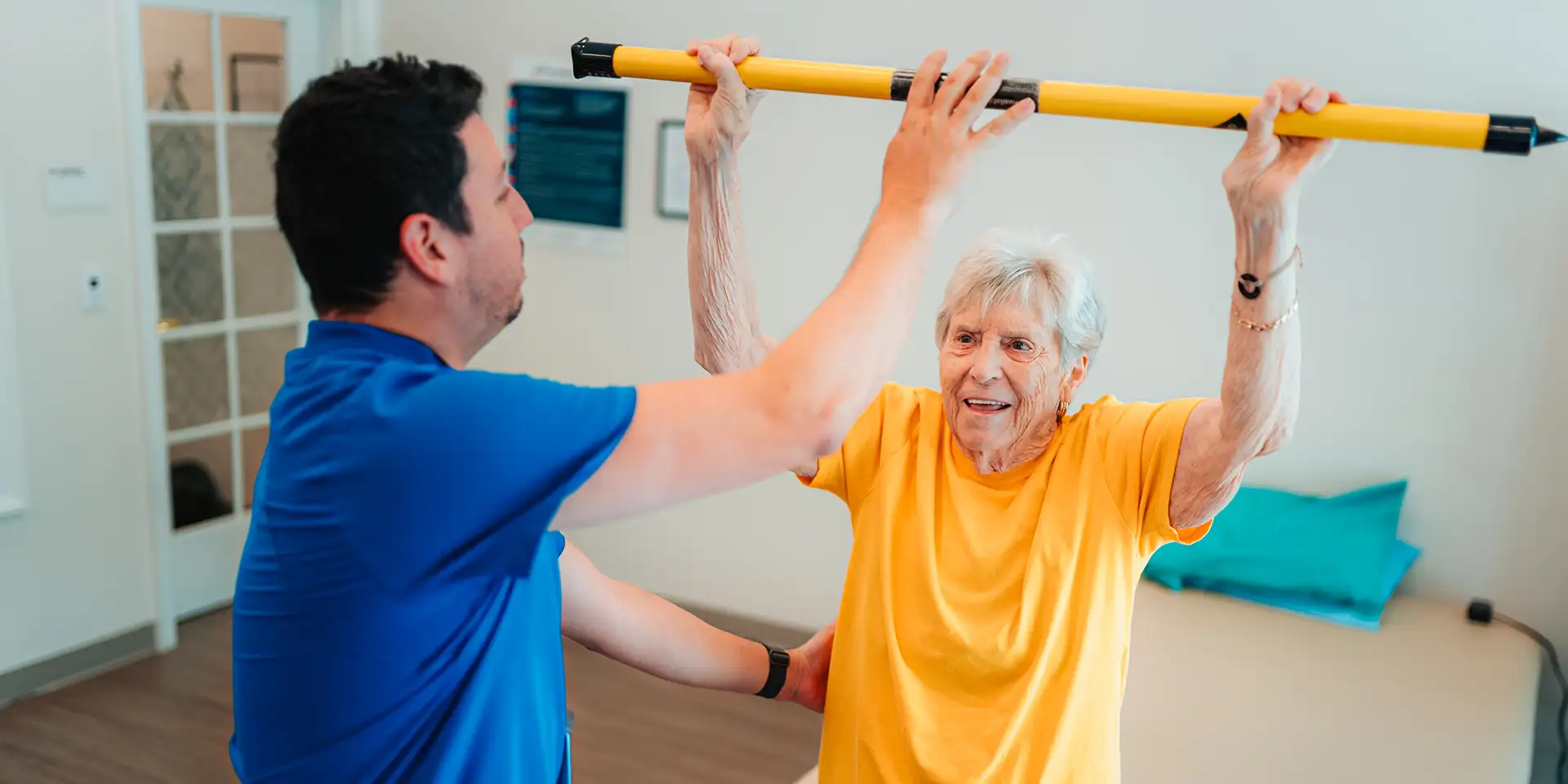
Physical therapy helps patients regain physical abilities with a focus on building strength, promoting mobility and managing pain. Exercises involve stretching, toning muscles, promoting balance and improving movement.
Occupational therapy deals with the skills you need to complete daily activities and take care of your personal needs. It might mean teaching you new ways to accomplish familiar tasks or introducing tools to help you complete everyday activities.
Speech and language therapy involves cognitive skills and communication, as well as actions like speaking and swallowing.
What kind of facility provides rehabilitation services?
Depending on your circumstances, you may have a variety of options for accessing skilled nursing after your hospital stay. Sometimes rehabilitation can take place in your home through home-based health care services or in an outpatient clinic.
However, many patients achieve better, longer-lasting outcomes with an inpatient rehabilitation program in a skilled nursing community. These facilities offer all of the care services you need under one roof so you can participate in intensive daily therapy on a short-term basis while you recover from a hospitalization.
How does short-term rehabilitation work?
Before you get discharged from a hospital, a social worker will talk with you about what to expect for post-hospital recovery care. In some cases, they may even be able to provide you with options for short-term rehabilitation in your community.
Once you arrive at the rehabilitation facility, you will undergo an assessment to establish your baseline function in a variety of areas and discuss your recovery goals with the care team. Together, you’ll create a care plan that puts you on a path toward achieving those goals.
You can expect therapy to begin right away and continue nearly every day of your stay. Meanwhile, you’ll have access to dedicated nursing staff who can assist with your medications, pain management and other medical needs.
While therapy and healing are your priorities, you’ll also have downtime when you can make use of the facility’s amenities and participate in activities and events with your peers.
Who benefits most from rehabilitation?
Several factors influence the outcome of short-term rehabilitation. One of the most important factors is active participation in the rehabilitation process. That means pushing to complete exercises, working closely with therapists to achieve goals and staying motivated to make steady progress.
Other notable factors include the timing of rehabilitative care; improvements tend to be greatest for those who can begin a rehab program as soon as medically possible after a significant health event. Those who experience an acute medical event or injury, or who are undergoing a planned surgery, are among the strongest candidates for successful rehabilitation.
How long does rehabilitation take?
The amount of care you need depends on why you need rehabilitation in the first place and how you are progressing against your goals. The amount of time you need for recovery also depends on how long you were hospitalized.
For a minor surgical procedure or illness, you may only need a week or two to regain your strength and get back on your feet. On the other hand, surgical patients and those with more complex medical conditions may need weeks or even months of skilled rehabilitative care before they can safely return to their normal routines.
How can I (or my family) plan ahead for a smoother recovery?
Patients with a strong support system tend to experience a smoother recovery in short-term rehabilitation. Family members who play an active role on the care team and learn techniques to support their loved ones help pave the way so the patient can focus on healing.
Other steps that help ensure a positive rehabilitative experience include:
- Organizing personal and household details ahead of time so the lawn receives care, bills get paid and the mailbox doesn’t overflow
- Researching insurance coverages and administrative details ahead of time
- Creating a care package with items from home that will make your stay more comfortable and familiar (think favorite games or books, slippers, clothing, etc.)
- Anticipating what you’ll need when you return home for a seamless transition, such as safety bars in the bathroom, a lower shelf for medication and other minor adjustments that make your daily life easier
Some questions you might ask include:
- What kinds of therapy are available, and what training do the therapists have?
- Is 24-hour nursing care available from a licensed nursing team?
- Are private living spaces available?
- What common spaces will you and your guests have access to?
- Will you have access to non-clinical enrichment programs, such as music or pet therapy?
- How will nutrition factor into your recovery plan?
- What are the guiding philosophies that influence resident care?
Explore compassionate short-term care in Atlanta
At Canterbury Court, residents of the Sage Glen skilled nursing neighborhood enjoy individualized attention, dedicated therapists and creative programs that break routines and boost spirits. We work collaboratively and compassionately with families to get residents back on familiar footing as efficiently as possible, all in a beautiful park-like setting in the heart of Atlanta’s Buckhead area. Get in touch to learn whether our skilled care and rehabilitation services are the right fit for you or your loved one.