

When a favorite song from your past plays on the radio, you might find yourself reaching for the volume so you can let the music surround you in memories. From the first familiar notes, you experience a rush that takes you to another place and time.
If you can relate, then it probably isn’t hard to understand why many senior living communities offer music therapy as part of their memory support services.
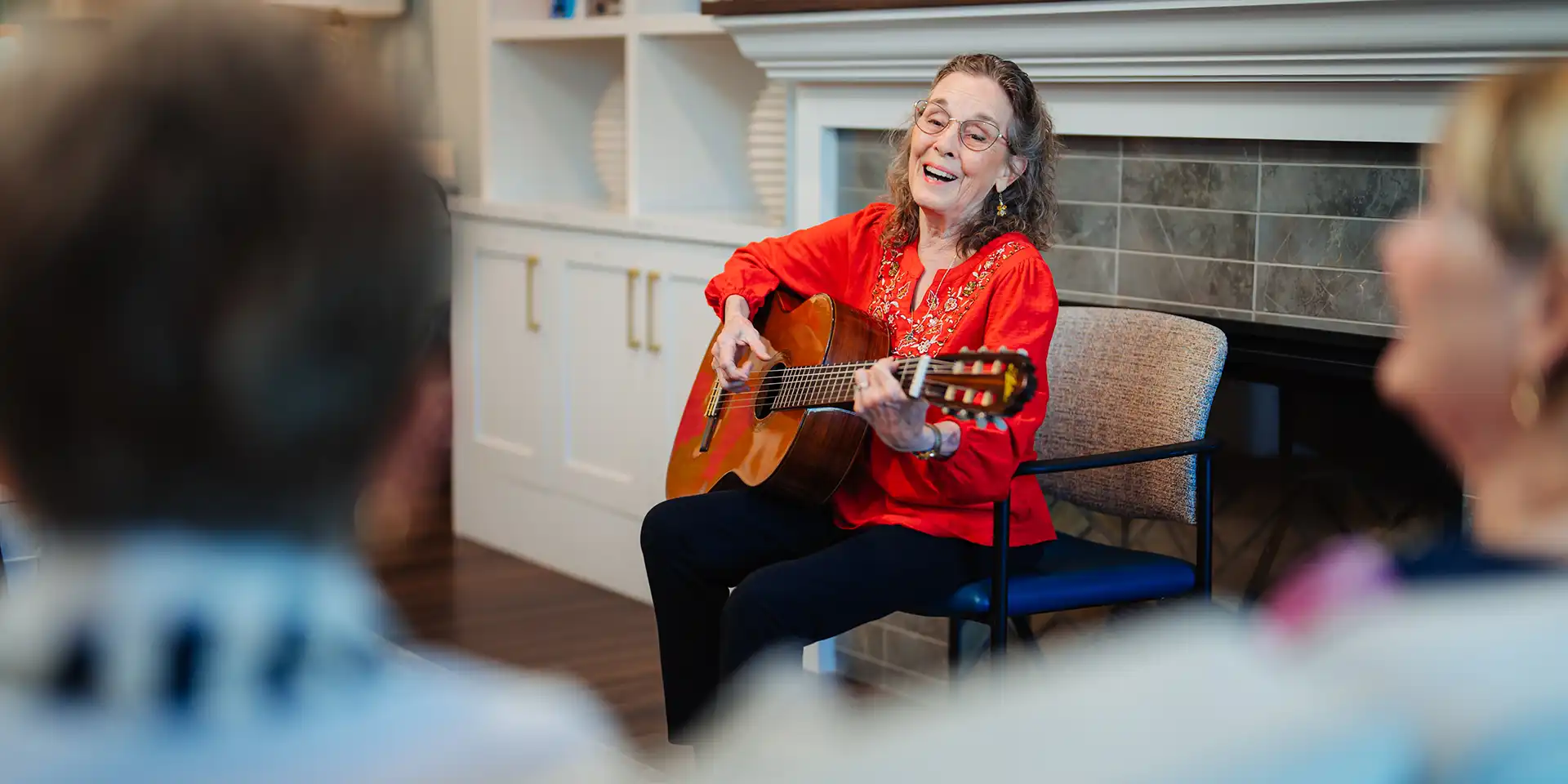
Music is a powerful reminder of moments from the past, making it a highly effective therapeutic tool for people living with dementia. Programming that incorporates music therapy for dementia involves familiar songs, rhythm, singing, movement and creative expression to support residents’ emotional well-being, engagement and connection with the world around them.
Why and How Music Therapy Helps
When a loved one with dementia has trouble recalling familiar words or recognizing beloved family members, it may seem counterintuitive to think music from years ago could play an effective role in therapy.
Yet research shows music can be a meaningful way to connect with people living with dementia, even as their memory and communication abilities change.
That’s because, for some people living with dementia, music can engage parts of the brain associated with feelings and emotions, even when other functions like memory and communication are becoming more challenging.
Music therapy is believed to help those with dementia:
Retrieve treasured memories. Deep emotions and connections tied to music can be more accessible than other aspects of memory, so a familiar tune can help bring cherished memories and emotions to the surface.
Stimulate their brain with an enjoyable activity. Music engages multiple parts of the brain simultaneously, so it’s tapping into sensory triggers as well as emotional ones.
Reconnect with what they enjoy. Familiar music can remind someone with memory loss of experiences, pastimes and moments that brought them immense joy.
Create a sense of calm. Just as your favorite music can have a soothing effect on you, it can do the same for someone with dementia who is unsettled. Beyond providing a mental distraction, it can also help reduce physical manifestations of stress like tension and an elevated heart rate.
Create personal connections with others. Even when other forms of communication are restricted, those with memory loss may still be able to sing, hum or keep rhythm with a recognizable song. That experience, shared one-on-one with a therapist, loved one or collectively in a group, creates a sense of intimacy while minimizing feelings of isolation.
Beyond formal therapy, music is a natural part of many everyday senior memory care activities. It’s present in everything from daily routines and group socialization to personal care and enriching exercises.
Music Therapy May Take Many Forms
Music is one of many different kinds of creative therapies for dementia. Technically speaking, music therapy involves musical interventions, backed by clinical and evidence-based research, to achieve specific therapeutic goals related to a person’s physical, mental and social well-being. Music-based activities can also be an important part of everyday memory care.
Implementation can take numerous forms depending on the resident’s unique needs. Some examples may include:
Playlists: A curated list of music from the resident’s teens and 20s can be especially beneficial since this age range is when most people tend to have the strongest emotional connection to music. However, other music with special personal significance, such as a favorite artist or music from a special occasion, can be equally impactful.
Instruments: Basic instruments that invite rhythmic movement (shakers, drumsticks, tambourines, etc.) can help engage residents in musically driven activity, promoting physical coordination, cognitive processing, and — when shared with others — camaraderie in a shared experience.
Movement: In a similar vein, connecting musical rhythm with actions like tapping toes or clapping can entice residents to participate in physical activity in a way that feels natural and enjoyable.
Communication: For those in early stages of dementia, music can provide a welcome source of stimulation, sparking memories that invite conversation and reminiscing.
Introducing Music Therapy for Your Loved One at Home
As a caregiver for a loved one with dementia, you may be wondering if you can use music therapy at home. While formal therapy to reach specific goals is generally best left for trained professionals, you can absolutely incorporate music into your daily routine as a means of soothing and engaging your loved one.
If you do so, these tips can help create a more successful experience:
- Pay close attention to their response, including cues from their body language.
- Adapt the music to the mood: upbeat tunes for active fun and mellow tracks to soothe.
- Rely on a playlist or streaming station to avoid commercial interruptions that may cause confusion.
- Make music a signal for activities throughout the day so your loved one connects the music with regular routines.
- In particular, plan on a gentle music session if you notice your loved one becoming especially restless or unsettled during certain times of the day.
Supporting Your Loved One with Memory Care
If you’re looking for additional help caring for a parent or loved one with Alzheimer’s disease, or another form of dementia, a community offering person-centered memory care
may be the perfect answer. Through personalized, professional programming — like music therapy that incorporates favorite artists and songs your family holds dear — care can be tailored to their unique needs and interests.
One option is Canterbury Court, a welcoming community offering memory care in Atlanta, right in the heart of Buckhead. Within the memory support neighborhood, called Wisteria Park, a skilled care team works closely with families to help each resident maintain a strong sense of self and foster individual and group connections with fellow residents and staff, all in a safe and secure environment.
In addition to providing weekly music therapy programs, Wisteria Park also introduces residents to a range of other programs and activities designed to engage and stimulate, including horticulture therapy in a dedicated Memory Support Garden, designed to allow residents to enjoy time in nature safely and securely.
Find out whether Canterbury Court is right for your loved one by arranging a visit to tour the beautiful private suites and learn more about the community’s therapeutic, resident-first programming.